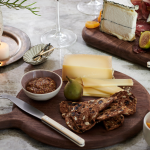
In the glittering world of high-stakes gambling – where fortunes turn as fast as a wheel spin at Flight Legends game – an unexpected ally has emerged from the most unlikely of places: the cheese board. What began as an eccentric ritual among a small circle of Monte Carlo regulars has evolved into a sophisticated psychological strategy that’s reshaping how the world’s most successful gamblers approach their craft.
The Birth of a Bizarre Tradition
The story begins in 2019 at the Casino de Monte-Carlo, where Russian oligarch Viktor Petrov was observed consuming precisely three cubes of aged Roquefort before each hand of baccarat. His winning streak that night—a staggering €2.3 million—caught the attention of fellow high rollers, but it was his explanation that truly intrigued them.
“Cheese grounds you,” Petrov told a select gathering at the casino’s private lounge. “The complexity of flavors forces your mind to process multiple sensory inputs simultaneously, sharpening your focus while paradoxically relaxing your decision-making process.”
What sounded like the ramblings of a superstitious gambler soon attracted the attention of Dr. Elena Marchetti, a neuroscientist from the University of Bologna who specializes in cognitive enhancement through sensory stimulation. Her subsequent research would validate what high rollers had stumbled upon through pure intuition.
The Science Behind the Strategy

Dr. Marchetti’s groundbreaking study, published in the Journal of Applied Cognitive Psychology, revealed that specific cheese compounds can indeed influence brain chemistry in ways that benefit strategic thinking. The tyramine found in aged cheeses like Parmesan and Gruyère acts as a natural norepinephrine booster, enhancing alertness without the jittery side effects of caffeine.
More intriguingly, the complex flavor profiles of artisanal cheeses engage multiple neural pathways simultaneously. “When you taste a well-aged Comté,” explains Dr. Marchetti, “your brain processes nutty, fruity, and umami notes while managing texture and temperature sensations. This multi-pathway activation creates what we call ‘cognitive flexibility’—the ability to switch between different concepts and adapt to new situations rapidly.”
For poker players reading micro-expressions or blackjack enthusiasts calculating odds, this enhanced cognitive flexibility translates to a measurable advantage. Test subjects who consumed specific cheese varieties before engaging in strategic games showed 23% better pattern recognition and 31% improved risk assessment compared to control groups.
The Underground Cheese Sommeliers

As word spread through exclusive gambling circles, a new profession emerged: the casino cheese sommelier. These specialized consultants work exclusively with high-roller clients, crafting personalized cheese profiles designed to optimize gambling performance.
Marcus Chen, formerly a Michelin-starred chef who now operates as a discrete consultant in Las Vegas, describes his role as part nutritionist, part psychologist, and part performance coach. “I don’t just recommend cheese,” Chen explains. “I analyze a client’s playing style, their typical session duration, their stress responses, and even their cultural background to create a customized fromage strategy.”
For Chen’s poker clients, he might recommend a sequence starting with mild, creamy Brie to promote initial calm, followed by sharp aged Cheddar during intensive betting rounds, and finishing with blue cheese to maintain focus during marathon sessions. The timing is crucial—consume too early and the effects fade, too late and digestion interferes with concentration.
High-Stakes Cheese Rituals
The Casino at Bellagio now discreetly stocks over 200 varieties of artisanal cheese in temperature-controlled storage, available to qualified high rollers through their private concierge service. The Wynn maintains relationships with three international cheese importers to ensure 24-hour availability of specific varieties requested by their whale clients.
But the practice extends far beyond simple consumption. Wealthy gamblers have developed elaborate pre-game rituals around their chosen fromage. Japanese technology entrepreneur Akira Tanaka reportedly travels with a portable cheese aging chamber, believing that the specific humidity and temperature conditions of his “lucky” Stilton must be maintained at exactly 55°F and 85% humidity.
Silicon Valley venture capitalist Sarah Goldstein takes a more scientific approach, using precision scales to consume exactly 1.7 ounces of Parmigiano-Reggiano aged precisely 24 months before each session. She credits this ritual with her legendary success at high-stakes Texas Hold’em tournaments.
The Psychology of Placebo and Performance
Dr. James Richardson, a sports psychologist who has studied ritual behavior in competitive environments, suggests that the effectiveness of cheese-based gambling strategies may transcend their biochemical benefits. “Ritual behavior creates psychological anchoring,” Richardson explains. “When you consistently perform the same pre-game routine and experience success, your brain begins to associate that routine with positive outcomes, creating a confidence feedback loop.”
This psychological component may be as important as any cognitive enhancement. The mere act of following a sophisticated, personalized cheese protocol signals to the gambler’s subconscious that they are prepared, professional, and in control—mental states crucial for optimal decision-making under pressure.
The exclusivity factor also plays a role. When a gambler believes they possess secret knowledge that gives them an edge over opponents, that confidence translates into more assertive play and better risk management.
The Cheese Arms Race
As cheese-enhanced gambling has gained traction among elite players, the stakes have escalated dramatically. Private cheese consultants now command fees of $50,000 per tournament, and some casinos have begun recruiting fromage specialists from renowned European cheese houses.
The most dedicated practitioners have formed an exclusive society known as “Les Connaisseurs du Destin” (The Connoisseurs of Destiny), which maintains a secret database of correlations between specific cheese varieties and gambling outcomes. Membership is by invitation only and requires a minimum gambling volume of $10 million annually.
Some casinos have responded by attempting to level the playing field, offering house cheese services or even banning outside food entirely from private gaming rooms. This has led to legal challenges, with high-roller attorneys arguing that cheese consumption constitutes a personal dietary requirement rather than a performance enhancement.
The Future of Fromage Gaming
The cheese-gambling phenomenon shows no signs of slowing. Entrepreneurs are developing cheese-infused gaming supplements, while researchers explore other foods that might offer similar cognitive benefits. Truffle oil, aged wines, and even specific chocolate varieties are being investigated for their potential gambling applications.
Some industry observers predict that cheese-enhanced gambling could eventually become as accepted as the lucky charms and superstitious rituals that have always been part of casino culture. Others worry about an escalating enhancement arms race that could fundamentally alter the nature of high-stakes gambling.
Dr. Marchetti continues her research, recently receiving a $2.4 million grant to study the long-term effects of strategic cheese consumption on decision-making abilities. Her preliminary findings suggest that regular practitioners may develop enhanced cognitive flexibility that benefits them far beyond the gaming table.
Rolling Forward
Whether driven by genuine biochemical advantages or powerful placebo effects, the marriage of artisanal cheese and high-stakes gambling has created a fascinating subculture within an already exclusive world. As more players adopt cheese-based strategies and casinos adapt their services accordingly, one thing is certain: the phrase “cutting the cheese” has taken on an entirely new meaning in the world’s most exclusive gaming rooms.
For now, the high rollers who swear by their fromage rituals continue to guard their specific strategies closely, treating their cheese selections with the same secrecy once reserved for card counting techniques. In a world where the smallest edge can mean the difference between triumph and catastrophe, perhaps it’s fitting that the humble cheese—aged, complex, and full of surprises—has found its place at the high-stakes table.
The next time you see a poker player carefully savoring a piece of aged Gouda before making a crucial bet, remember: they might not just be satisfying a craving. They could be executing a carefully crafted strategy that transforms dairy into dollars, one bite at a time.